
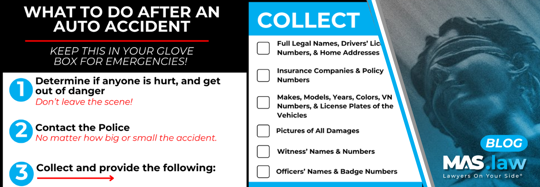
Motor vehicle accidents can be stressful, confusing, and even traumatic. Knowing what steps to take immediately after a collision can protect your safety, your health, and your legal rights. At MAS Law, we’ve helped clients navigate the aftermath of car accidents for nearly 25 years. Below is a practical guide on what to do after a motor vehicle collision to ensure your safety and maximize your recovery.
1. Ensure Safety and Check for Injuries
The first priority after a collision is safety. Determine if anyone is injured, and if so, call 911 immediately. Move to a safe location if possible, but do not leave the scene of the accident. Leaving the scene can lead to legal consequences and may jeopardize your claim.
Even if you feel fine, be aware that some injuries, like whiplash or concussions, may not be immediately apparent. Seek medical attention as soon as possible.
2. Contact the Police
No matter how minor the accident appears, it is important to contact law enforcement. A police report provides an official record of the incident, which is often essential for insurance claims or legal proceedings.
Make sure to get the officer’s name, badge number, and a copy of the police report if possible.
3. Collect Critical Information
Proper documentation of the accident is vital for insurance and legal purposes. Be sure to collect the following information:
Driver Information:
- Full legal name
- Driver’s license number
- Insurance company and policy number
Vehicle Information:
- Make, model, year, and color
- Vehicle Identification Number (VIN)
- License plate number
Additional Information:
- Names and phone numbers of witnesses
- Photos of vehicle damage, accident scene, and any visible injuries
- Officer’s name and badge number
4. Exchange Your Information
Provide your identification and insurance information to the other driver(s) involved. This includes:
- Your full legal name and home address
- Insurance company and policy number
- Vehicle details, including make, model, year, and license plate
Remember to remain calm and courteous while exchanging information, but do not admit fault or apologize for the accident, as this could be used against you later.
5. Tow and Medical Attention
If your car is not drivable, arrange for towing. However, your health should come first. See a doctor immediately, even if you feel fine. Early medical evaluation ensures that injuries are documented and treated properly, which is critical for both your recovery and any potential personal injury claim.
6. Document Everything
Documenting the accident thoroughly is key. Take clear photos of:
- Vehicle damage
- License plates of involved vehicles
- Injuries or visible bruising
- The surrounding accident scene
Keep copies of medical records, repair estimates, and any communication with insurance companies.
7. Seek Legal Advice
Even seemingly minor accidents can have serious long-term consequences. Consulting with an experienced personal injury attorney can help ensure your rights are protected, all insurance claims are properly handled, and you receive the full compensation you deserve.
At MAS Law, we guide our clients through every step of the process after a car accident—from gathering evidence and medical documentation to negotiating with insurance companies. Our goal is to make the legal process as smooth as possible while protecting your health, safety, and financial recovery.
Conclusion
Being prepared and knowing the proper steps to take after a car accident can make a significant difference in your recovery and legal outcomes. Always prioritize safety, gather detailed information, seek medical care, and consult an attorney who understands the complexities of personal injury law.
If you’ve been injured in a car accident, contact MAS Law today to protect your rights and maximize your recovery.
.2512160629105.png)